
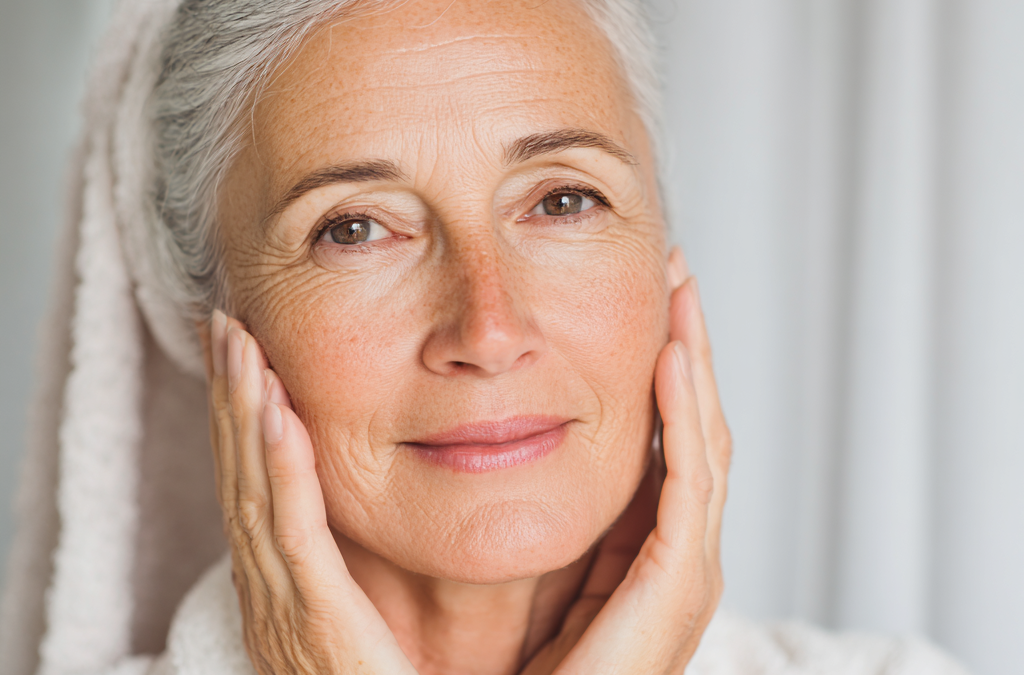
How your skincare routine affects your brain, confidence, and emotional wellbeing and why it matters now more than ever.
Have you ever finished your evening skincare routine, looked in the mirror and felt calmer, softer, more ‘you.’ Maybe you felt your shoulders drop. Maybe you smiled at yourself without planning to. That wasn’t your imagination. That was biology.
Your skin and your brain are connected in ways the beauty industry is finally starting to talk about. And I’d love over 50 women to be leading this conversation.
Why? Simple — we’ve spent years being told skincare is about ‘anti-ageing’ and fixing ourselves.
But no. Turns out it’s much more than that.
Skincare is emotional care. Skincare is connection.
Skincare is self-respect.
And now there’s nuggets of science to back it up.
Your skin and brain developed together
When you were growing in the womb, your skin and brain formed from the same embryonic germ layer, meaning they’re biologically linked. Clever eh! That relationship never ends.
So, when your mind feels calm, safe or stressed, your skin reacts.
And when your skin is gently and intentionally touched, your brain responds emotionally.
It’s a two-way conversation.
Why applying skincare feels so good
When you massage your moisturiser in slowly, not the slap-and-go method, your body regulates four chemicals like this:
1 Increases dopamine which rewards pleasure making skincare feel motivating and enjoyable.
2 Increases serotonin, which is a mood stabiliser and boosts happiness.
3 Increases oxytocin, which is a bonding chemical and creates connection, even with yourself.
4 Lowers the levels of cortisone, helping to reduce stress.
So yes, skincare can feel like a hug. Because chemically it is.
Routine = emotional stability
Research shows that having a daily skincare routine improves:
- Mood
- Confidence
- Emotional resilience
- Stress levels
Even better?
Women in studies continued to experience these benefits even after stopping the products, suggesting the habit itself is therapeutic.
Texture, scent and pleasure matter
As we age, we become more intuitive with what feels right.
Your brain reacts to:
- Silky textures
- Soothing scents
- Luxurious application
- How creams glide on
These sensory experiences activate the brain’s reward centres even before a single wrinkle is addressed.
Translation — if you smile when you apply it, keep using it.
The new world of neurocosmetics
And now? Science is designing ingredients specifically for this brain-skin conversation.
Some newer skincare ingredients are designed not just to help skin look good, but also to help you feel good.
They work by:
- Activating emotional receptors in the skin
- Supporting feel-good responses
- Reducing the stress response
It’s science finally meeting self-care.
The bottom line
Your skincare routine is not shallow. It’s not indulgent.
And it’s definitely not silly.
It’s nervous system regulation, emotional nourishment, and confidence-building wrapped in a moisturiser.
Try this tonight
Intentionally slow your routine down.
- Apply serums and creams gently
- Massage slowly
- Breathe
- Let your brain catch up with the moment
Say to yourself:
“This is good for me. I deserve to care for myself.”
Because you absolutely do.
About the science
The idea of neurocosmetics — skincare that supports both emotional wellbeing and skin health is still relatively new. The concepts shared in this post are based on early industry research, emerging studies and the growing understanding of how the brain and skin communicate.
Some of the studies referenced come from cosmetic research labs rather than long-term peer-reviewed academic papers, which means the evidence is promising, but still developing. A bit like a very good story with a few chapters still being written.
That said, the broader scientific evidence supporting touch, routine, nervous system regulation, mindfulness, and the brain’s reward pathways is well documented. And honestly? Most of us didn’t need a laboratory to tell us that a slow, intentional skincare routine feels good, but it is lovely to see science catching up to what women have always intuitively known.
So, while this field is evolving, one thing is already clear.
Taking a little time to care for your skin isn’t vanity, it’s a form of emotional support, self-respect and wellbeing, especially during the second half of life when we’re rewriting how we experience ageing.
And that is a beautiful direction for skincare to go don’t you think?
If you want a feel good winter skin routine now the weather has change, check this blog out Winter skincare SOS: How to keep your skin happy, hydrated, and glowing
A question for you
Do you rush your skincare routine, or is it a ritual?
Tell me in the comments.